
Materiality Analysis and Stakeholder Engagement
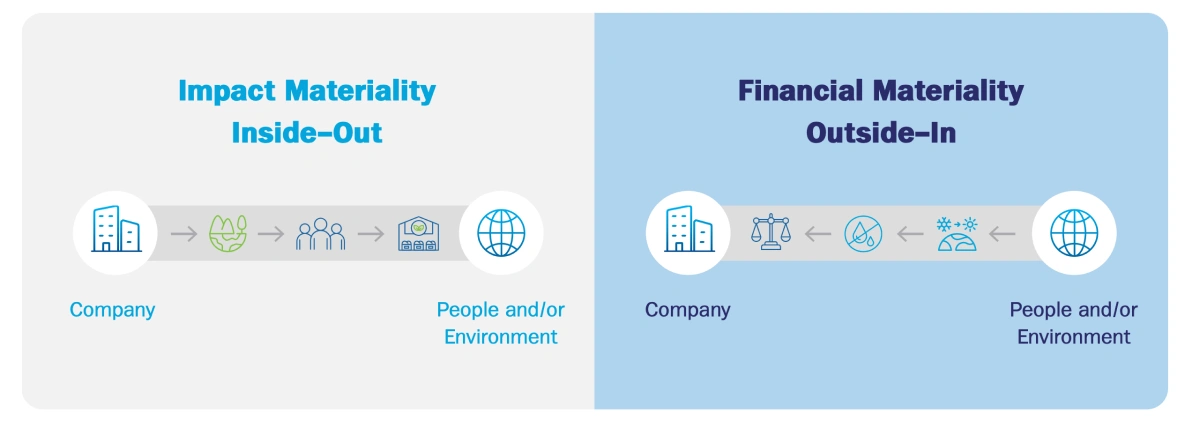
Sustainability topics are assessed using the Double Materiality approach in accordance with GRI 3: Material Topics 2021 to identify issues that are material to stakeholders and long-term enterprise value. The assessment covers both:
- Impact Materiality (Inside-Out): The Company’s impacts on the economy, society, and environment across the “Farm to Shelf” value chain.
- Financial Materiality (Outside-In): Sustainability-related risks and opportunities that may affect business performance, supply chain resilience, and enterprise value.
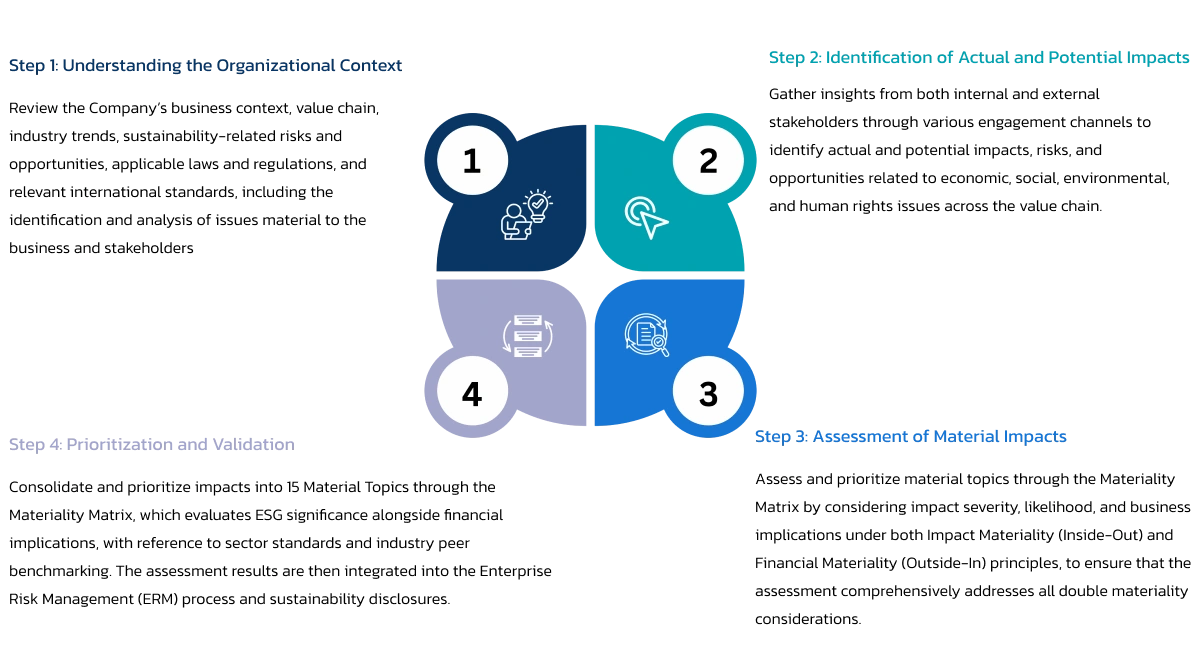
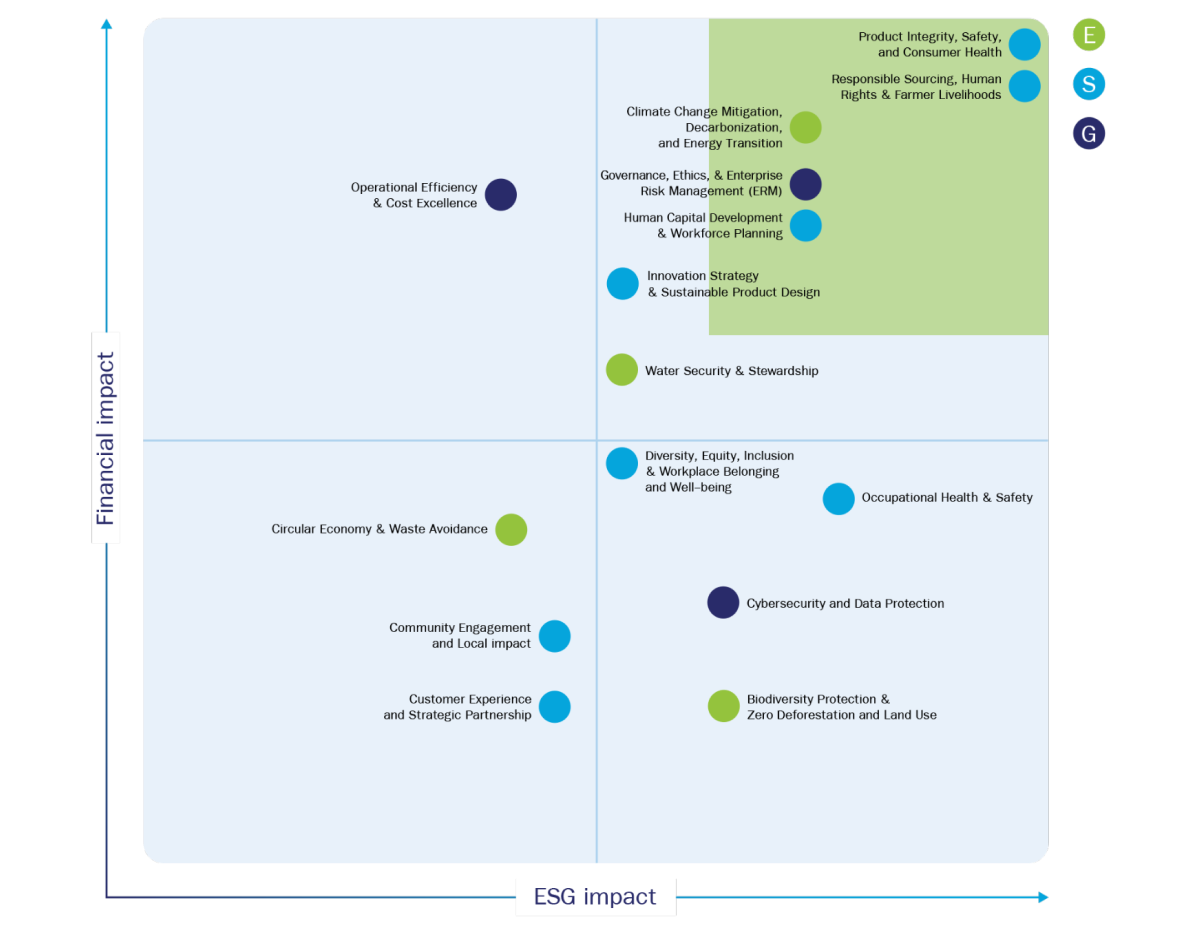
The assessment is reviewed at least annually based on insights gathered through engagement with both internal and external stakeholders. Material topics are prioritized through a Materiality Matrix considering impact significance and likelihood, before being proposed to the Sustainability Committee and the Board of Directors for approval.
The assessment results are used to define sustainability strategies, targets, and disclosures, and are integrated into the Company’s Enterprise Risk Management (ERM) process to align with international frameworks and assessment standards, including FTSE Russell, EcoVadis, and CDP, while addressing stakeholder expectations.
Double Materiality Assessment Process
Materiality Topics
| ESG Dimension | Material Topics | Strategic Description & Objectives |
|---|---|---|
| E - Environment | Climate Change Mitigation, Decarbonization, and Energy Transition | The Company implements an absolute greenhouse gas (GHG) emission reduction strategy aimed at achieving Net Zero by 2050. This includes transitioning toward renewable and clean energy, as well as scaling the Bio-Circular-Green (BCG) economic model to reduce environmental footprints across the entire value chain. |
| Biodiversity Protection & Zero Deforestation and Land Use | The Company is committed to safeguarding local ecosystems and ensuring that the procurement of agricultural raw materials does not contribute to habitat degradation. This involves conducting biodiversity risk assessments across operational areas and enforcing a strict No-Deforestation policy. | |
| Water Security & Stewardship | The Company focuses on mitigating water scarcity risks, ensuring 100% compliant wastewater treatment, and engaging proactively with stakeholders in water-stressed regions to strengthen water stewardship. | |
| Circular Economy & Waste Avoidance | The Company is shifting from linear business models toward systems that prioritize reduction (Reduce), reuse (Reuse), and upcycling (Upcycle) of materials. The objective is to eliminate waste to landfill and minimize finished-product waste throughout operations. | |
| S - Social | Product Integrity, Safety, and Consumer Health | The Company adheres to a “Zero Defect” philosophy to ensure that no unsafe or substandard products reach consumers. As a food and starch manufacturer, the Company maintains stringent quality controls and ensures full compliance with regulatory requirements across global target markets. |
| Responsible Sourcing, Human Rights & Farmer Livelihoods | The Company upholds international human rights standards (UNGP, ILO) to prevent child labor, forced labor, and other risks within agricultural and non-agricultural supply chains. The Company also strengthens supply chain resilience by improving farmer livelihoods through mechanization support, healthy stems, and soil-enhancing materials. | |
| Human Capital Development & Workforce Planning | The Company invests in future-ready skills and leadership capabilities to drive organizational transformation. This includes Skill Matrix planning, personalized e-learning pathways, and the “Heart-Head-Hand” methodology to cultivate “Digital Change Agents” adept in AI and emerging technologies. | |
| Occupational Health & Safety | The Company is committed to fostering a safe and healthy workplace, with the ultimate goal of achieving Zero Injuries for all employees and contractors. Safety awareness is reinforced through comprehensive “Safety First” training integrated across operations. | |
| Innovation Strategy & Sustainable Product Design | The Company drives growth through the development of healthier, functional, and sustainable products. New product development mechanisms emphasize clean-label solutions and plant-based innovations aligned with the UN Sustainable Development Goals (SDGs). | |
| Diversity, Equity, Inclusion & Workplace Belonging and Well-being | The Company fosters a high-performance “SFB Culture” (Stronger, Faster, Better) rooted in fairness, respect, and inclusion. Initiatives include gender balance in management roles, equitable treatment of migrant workers, and holistic employee well‑being programs covering mental, physical, and financial health. | |
| Community Engagement and Local impact | The Company aims to deliver measurable positive impact to uphold its Social License to Operate. Efforts include supporting regional economic development, food security, and public health in local communities, while prioritizing local employment and local raw material sourcing. | |
| Customer Experience and Strategic Partnership | The Company is transitioning from a traditional distributor role to that of a strategic partner, emphasizing customer proximity, collaborative innovation workshops, and enhanced responsiveness. Digital platforms are being leveraged to provide faster and more comprehensive product information. | |
| G - Governance | Governance, Ethics, & Enterprise Risk Management (ERM) | The Company upholds accountability and transparency under a governance framework overseen by the Board of Directors. The “Business Integrity” program encompasses anti‑corruption measures (CAC), whistleblower protection, and a centralized contract management system to mitigate financial, legal, and ESG-related risks while aligning with regulatory and media expectations. |
| Cybersecurity and Data Protection | The Company views cyber resilience as a strategic imperative, ensuring the protection of digital infrastructure, intellectual property, and stakeholder data from cyber threats, data breaches, and unauthorized access. This commitment reinforces the integrity, confidentiality, and availability of personal data and digital systems. | |
| Operational Efficiency & Cost Excellence | The Company enhances cost efficiency by optimizing processes and accelerating digitalization through Lean/TPM systems, automation, and real-time data dashboards, enabling the organization to address rising utility and labor costs effectively. |
The Company recognizes stakeholder engagement as a key driver in advancing sustainable development. Stakeholder opinions, expectations, and feedback are regularly gathered through appropriate and transparent engagement channels, with annual reviews conducted to ensure continuous improvement.
The Company has identified 10 stakeholder groups covering parties directly and indirectly affected by business operations, including farmers, customers and consumers, business partners and suppliers, employees, communities and society, shareholders and investors, government agencies, creditors and financial institutions, public interest organizations, and media. This stakeholder mapping enables the Company to effectively understand, address, and respond to material concerns and expectations in a timely and appropriate manner.

Engagement Channels
- Field visits by agronomist team
- Sustainable Agriculture and Regenerative Farming Development Programs
- Farmer satisfaction and feedback surveys
- Thank you Farmer Day
Examples of Expectations
- Improved quality of life, livelihood, and economic opportunity for farmers
- Fair and transparent raw material purchasing practices
- Support for sustainable and safe agricultural practices, such as soil quality improvement and access to clean stems
- Knowledge and training on agricultural technologies, innovations, and efficient waste management systems
Examples of Company Responses
- Regular field visits and close collaboration with farmers by agronomists
- Provision of clean stems
- Farmer training programs to enhance skills in crop management, business operations, and farm productivity
- Provision of agricultural tools and equipment to reduce labor dependency and increase efficiency
For more details, see the section “Farmer Development.”

Engagement Channels
- Customer satisfaction surveys
- Email communication and virtual meetings
- Customer visits and business meetings
- Contact channels and information updates via the Company’s website and social media platforms such as Facebook, YouTube, LinkedIn, and Line@
Examples of Expectations
- Food quality and safety assurance
- Access to healthy and nutritious food options
- Food innovation and product diversity
- Responsible marketing and clear product labeling
- Transparency and progress in sustainability performance
- Responsive sales and after-sales services, including faster response times and clearer, more accessible digital product information
Examples of Company Responses
- Development of products that meet international quality and safety standards
- Product and service development tailored to customer needs
- Expansion of online and offline communication channels to enhance customer engagement
- Offering a wider range of healthier product alternatives
- Promoting consumer awareness of nutrition and ingredients
- Strengthening marketing campaigns and promotional activities to meet global market demands
See the section “Food and Finished Goods” for more details.

Engagement Channels
- Communication via website and email
- Supplier site visits and audits
- Supplier sustainability assessment questionnaires
Examples of Expectations
- Fair, transparent, and legally compliant procurement and payment practices
- Support activities for capacity building of small suppliers
Examples of Company Responses
- Procurement practices that consider environmental and social impacts, governance, and human rights principles
- Notify suppliers, secure their acknowledgement of the Supplier Code of Conduct for 100% compliance, and encourage participation in anti corruption initiatives such as CAC.
- Strong supplier relationship management and continuous capability-building activities, such as training on organizational greenhouse gas management
See the section “Food and Finished Goods” for more details.

Engagement Channels
- Associate Engagement Survey (AES) every two years
- Town Hall meetings for all levels
- Annual performance reviews
- Activity satisfaction surveys
- “My Thai Wah” mobile application
Examples of Expectations
- Career development, skills training, and capability enhancement
- Channels for employee voice and participation
- Occupational health and safety
- Competitive compensation, incentives, and benefits
Examples of Company Responses
- Enhancement of the Performance Management System (PMS) to promote fair growth and reward opportunities
- Development programs aligned with employee interests to strengthen capabilities and support the transition to a digital-ready organization
- Structured onboarding programs for new-joiners
- Improved employee health and welfare services, such as vaccination clinics, massage therapy by visually impaired practitioners, counseling services, and hospital access through the TPA Care app
- Financial wellness benefits and education support for employees’ families
See “Green Factory and Community Development” and “Thai Wah Family Well-being” for more details.

Engagement Channels
- Community engagement activities (Thai Wah Care and Community Day)
- Grievance and feedback channels
Examples of Expectations
- Job creation and community economic development
- Minimizing environmental and social impacts from operations
- Business growth that contributes to community development
Examples of Company Responses
- Energy and waste management initiatives to mitigate environmental impacts
- Regular communication through community leaders and other channels
- Annual community engagement events
See “Farmer Development” and “Green Factory and Community Development” for more details.

Engagement Channels
- Annual General Meeting (AGM)
- Analyst meetings
- Opportunity Day sessions
- Media interviews
- Website, email, and phone communications
- Annual Report (56 1 One Report) and Sustainability Report
Examples of Expectations
- Good corporate governance
- Anti-corruption measures
- Sustainability performance and progress
- Transparent, accurate, and timely disclosure
Examples of Company Responses
- Compliance with good corporate governance principles
- Ensuring transparent and equitable treatment of shareholders
- Establish clear guidelines for disclosing risk management strategies to stakeholders and investors.
- Integration of ESG risks into the Enterprise Risk Management (ERM) framework
See the section “Corporate Governance” for more details.

Engagement Channels
- Annual Report (56 1 One Report) and Sustainability Report
- Collaboration projects with government and private sector
- Participation in government-related meetings and events
Examples of Expectations
- Compliance with food, environmental, and related regulations
- Good corporate governance
- Anti-corruption
- Support for Nationally Determined Contributions such as greenhouse gas emission reduction
Examples of Company Responses
- Operating in full compliance with relevant laws and regulations
- Supporting government initiatives aligned with shared objectives
- Disclosing greenhouse gas emissions and developing effective climate strategies
- Supporting or initiating programs to uplift the agricultural and food sector
See “Good Corporate Governance” for more details.

Engagement Channels
- Annual Report (56 1 One Report) and Sustainability Report
- Financial and risk management reports
Examples of Expectations
- Good corporate governance
- Anti-corruption
- Business performance and profitability
- Transparent and timely reporting
Examples of Company Responses
- Compliance with corporate governance principles
- Integration of ESG risks into the ERM framework
- Financial disclosures in accordance with reporting standards

Engagement Channels
- Sustainability Report
- Website, email, and telephone
Examples of Expectations
- Business practices aligned with UN Guiding Principles on Business and Human Rights (UNGP)
- Environmental policies and commitments
Examples of Company Responses
- Compliance with good corporate governance principles
- Public commitments on biodiversity protection and zero deforestation

Engagement Channels
- Annual Report (56 1 One Report) and Sustainability Report
- Press conferences
- Public relations activities
Examples of Expectations
- Good corporate governance
- Company performance and profitability
- Transparent and timely disclosure
Examples of Company Responses
- Adherence to good corporate governance principles
- Regular communication and updates to the media, including business directions and international recognitions